French Drain Installation: Effective Water Management for Your Property
French drains are one of the most effective and time-tested methods for managing subsurface water. At Sump Plus, professionals provide expert French drain installation services across Ipswich, Suffolk, and the surrounding areas. If you’re dealing with a waterlogged garden, damp foundations, or persistent surface water, a French drain could be the ideal solution for your property.
Our experienced team has installed French drain systems in hundreds of Suffolk properties, from period cottages with vulnerable cellars to modern developments struggling with poor site drainage. We design each system to suit your property’s specific conditions, ensuring effective water management for years to come.
What Is a French Drain?
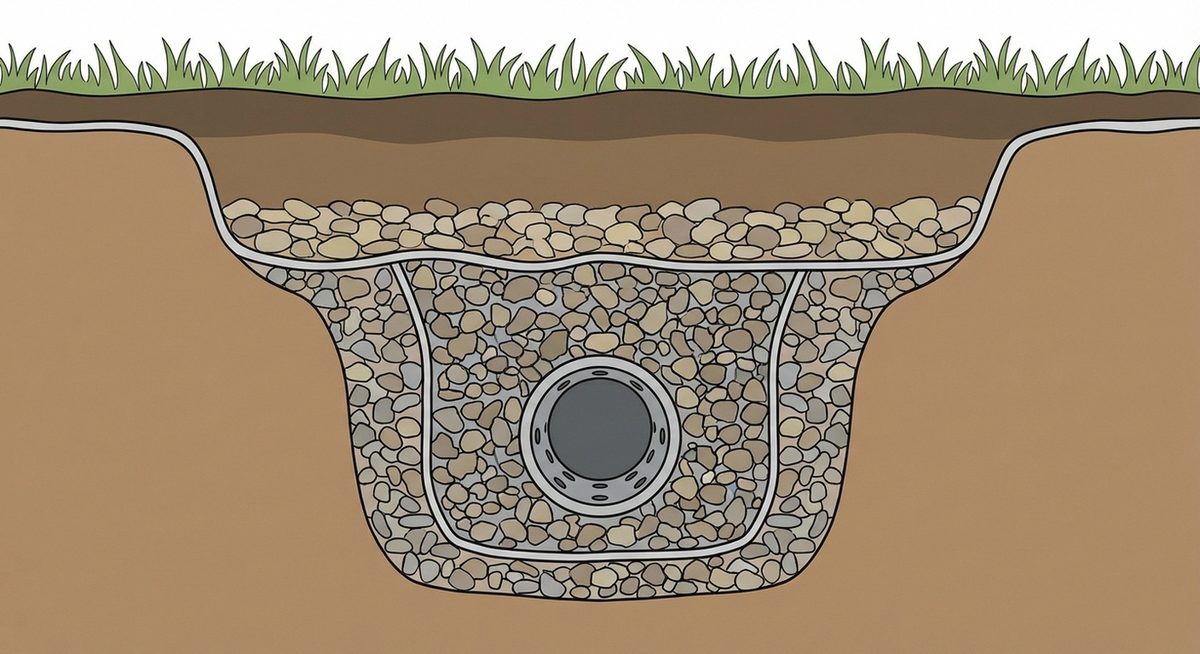
A French drain is a gravel-filled trench containing a perforated pipe that collects and redirects groundwater and surface water away from your property. The gravel acts as a filter, allowing water to enter the trench from the surrounding soil, whilst the perforated pipe channels the collected water to a designated discharge point such as a soakaway, storm drain, or watercourse.
Despite their simplicity, French drains are remarkably effective. They work passively — requiring no power or mechanical components — and can intercept water over large areas. When properly designed and installed, they provide decades of reliable service.
How French Drains Work
The science behind a French drain is straightforward. Water always flows downhill and takes the path of least resistance. A French drain exploits these principles by:
- Creating a low point — The trench is excavated below the level where water is causing problems, encouraging water to flow towards it by gravity.
- Providing easy entry — The gravel fill and geotextile membrane allow water to enter the trench freely whilst preventing soil from clogging the system.
- Channelling water away — The perforated pipe at the base of the trench carries the collected water to a safe discharge point, maintaining a consistent gradient throughout.
When Do You Need a French Drain?
French drains are the ideal solution for numerous water management challenges:
- Waterlogged gardens — Soggy lawns and borders that remain wet long after rain has stopped.
- Foundation protection — Intercepting groundwater before it reaches your property’s foundations.
- Retaining wall drainage — Relieving hydrostatic pressure behind retaining walls to prevent structural failure.
- Driveway and patio drainage — Managing water that pools on or adjacent to hard surfaces.
- Basement water management — Diverting water away from below-ground structures in conjunction with basement waterproofing.
- Slope drainage — Intercepting water flowing down hillsides towards your property.
The Installation Process
A French drain is only as good as its design and installation. Here’s our proven process:
1. Site Assessment
We survey your property to understand the water flow patterns, soil composition, ground levels, and existing drainage infrastructure. In Suffolk, where clay soils are prevalent, this assessment is crucial for determining trench depth, pipe diameter, and gravel specification.
2. System Design
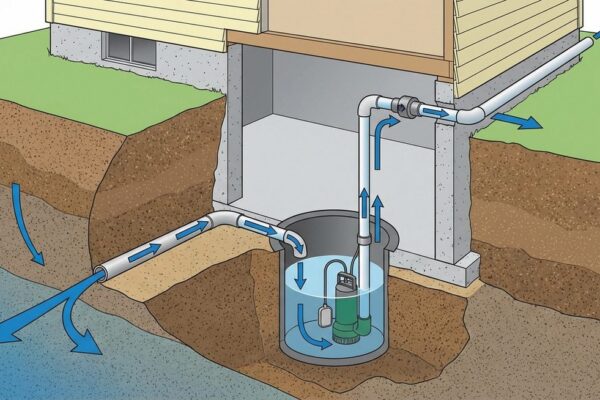
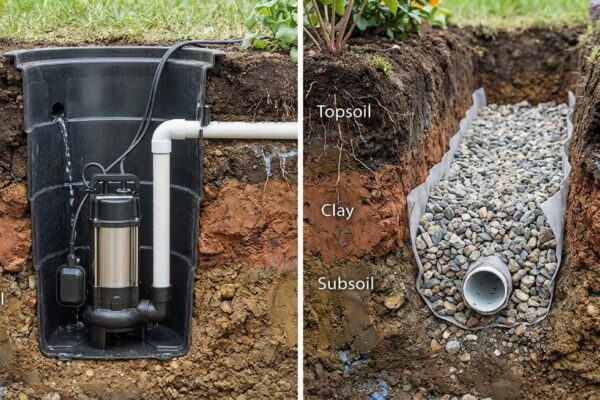
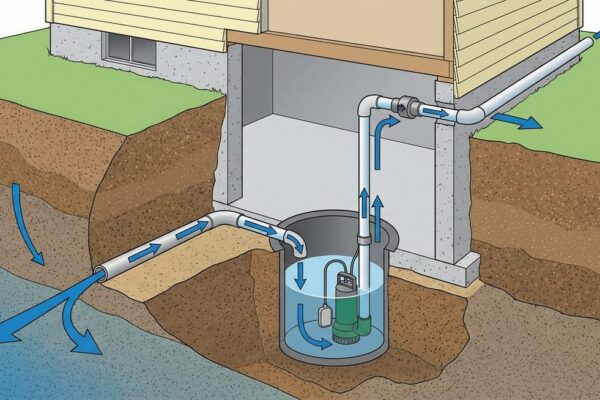
We design the French drain layout to intercept water where it matters most and direct it to an appropriate discharge point. This includes calculating trench dimensions, pipe gradients, and gravel volumes. For complex installations, we may incorporate multiple drain runs connected to a sump pump system.
3. Excavation
The trench is carefully excavated to the correct depth and width, typically 300-600mm wide and 600-1200mm deep depending on the application. We use mini excavators where access allows, or hand-dig in sensitive areas near structures, trees, and underground services.
4. Membrane and Aggregate Installation
A geotextile membrane is laid in the trench to prevent fine soil particles from migrating into the gravel and causing blockages. Clean, angular aggregate is then placed around the perforated pipe, ensuring consistent water flow throughout the system.
5. Pipe Laying and Connection
The perforated drainage pipe is laid at a consistent gradient (typically 1:100 to 1:200) to ensure reliable water flow. The pipe is connected to the discharge point, and inspection chambers are installed at junctions and changes of direction for future maintenance access.
6. Backfilling and Reinstatement
The trench is backfilled with aggregate to within 150-200mm of the surface, then capped with topsoil or turf. Within a few weeks, the trench line becomes virtually invisible in a lawn setting.
French Drain Costs
The cost of a French drain installation depends on the length, depth, and complexity of the system. As a general guide:
- Short run (up to 10 metres) — From approximately £500 to £1,200
- Medium system (10-25 metres) — From approximately £1,200 to £3,000
- Large or complex system (25+ metres) — From approximately £3,000 to £6,000+
These figures include all materials, labour, and waste removal. Professional installers typically provide detailed quotations after an initial site survey.
French Drain Maintenance
One of the great advantages of French drains is their low maintenance requirements. However, to ensure long-term performance:
- Keep surface openings clear of leaves and debris
- Avoid planting trees or large shrubs near the drain run — roots can infiltrate the pipe
- Have the system inspected every few years, especially if you notice reduced performance
- Ensure discharge points remain clear and functional
Related Services
- Drainage Solutions — Comprehensive drainage services for all property types.
- Sump Pump Installation — Pair your French drain with a pump system for maximum protection.
- Basement Waterproofing — Complete below-ground protection systems.
- Sump Pump Repair & Maintenance — Ongoing support for pump components in your drainage system.
- Emergency Drainage Services — Immediate response when water problems become urgent.
Learn more about water management in our sump pump and drainage guide.
Frequently Asked Questions
How deep should a French drain be?
The depth depends on the application. For garden drainage, 450-600mm is typically sufficient. For foundation protection, drains should extend to at least the base of the footings, often 900-1200mm deep. We determine the optimal depth during the site survey.
How long does a French drain last?
A properly installed French drain with quality geotextile membrane and aggregate should last 20-30 years or more. The geotextile is the key component — it prevents soil particles from clogging the gravel, maintaining the system’s effectiveness over time.
Will a French drain solve my waterlogged garden?
In most cases, yes. French drains are exceptionally effective at removing excess water from soil. For Suffolk’s clay-heavy gardens, a well-designed French drain system can transform a boggy, unusable garden into a dry, enjoyable space within days of installation.
Can I install a French drain myself?
Whilst the concept is simple, effective French drain installation requires careful gradient calculation, proper material selection, and knowledge of underground services. Incorrect installation can fail quickly or even make water problems worse. Professional installation ensures the system works correctly from day one.
Where does the water from a French drain go?
Collected water is directed to an appropriate discharge point. This could be a soakaway in a suitable area of your property, a surface water drain, a nearby ditch or watercourse, or a sump pump system. We assess the best option for your specific situation during the design phase.
Do French drains work in clay soil?
French drains are particularly valuable in clay soil areas like much of Suffolk. Because clay has very low natural permeability, water tends to sit near the surface. A French drain provides an alternative drainage pathway, collecting water and piping it to a suitable outfall. The key is using the correct geotextile and aggregate specification for clay conditions.
Do I need planning permission for a French drain?
French drain installation within your own property typically doesn’t require planning permission. However, if you need to discharge water into a watercourse or public drain, consent from the Environment Agency or local water authority may be required. We manage all necessary consents as part of the service.
How long does installation take?
A typical domestic French drain installation takes one to three days depending on the length and depth of the system. We complete most residential projects within a week, including reinstatement of lawns and landscaping.
What’s the difference between a French drain and a soakaway?
A French drain collects water along its length and pipes it to a discharge point. A soakaway is a single point where collected water is stored temporarily and allowed to percolate into the soil. They’re complementary systems — often a French drain feeds into a soakaway as its discharge point.
Can a French drain be installed under a driveway?
Yes, French drains can be installed beneath driveways, patios, and other hard surfaces. The installation is best done before the surface is laid, but we can also retrofit systems by cutting and reinstating paving. We often combine these with channel drains at the surface for maximum effectiveness.
Request Your Free French Drain Survey
Stop battling waterlogged ground and protect your property with a professionally installed French drain system. Our free site surveys include a full assessment and detailed quotation with no obligation. We serve Ipswich, Woodbridge, Felixstowe, Stowmarket, and all areas throughout Suffolk.