Understanding the Different Types of Sump Pumps
Choosing the right sump pump is crucial for effective basement waterproofing and flood prevention. With several types available, each designed for specific situations, understanding the differences helps you make an informed decision that protects your property for years to come.
This guide explains each type of sump pump in detail, helping you understand which is best suited to your property.
Submersible Sump Pumps
How They Work
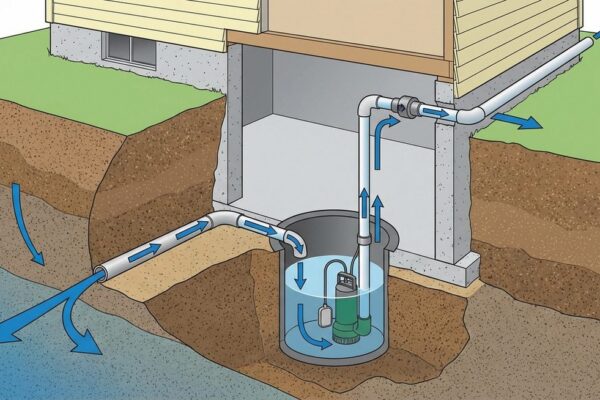
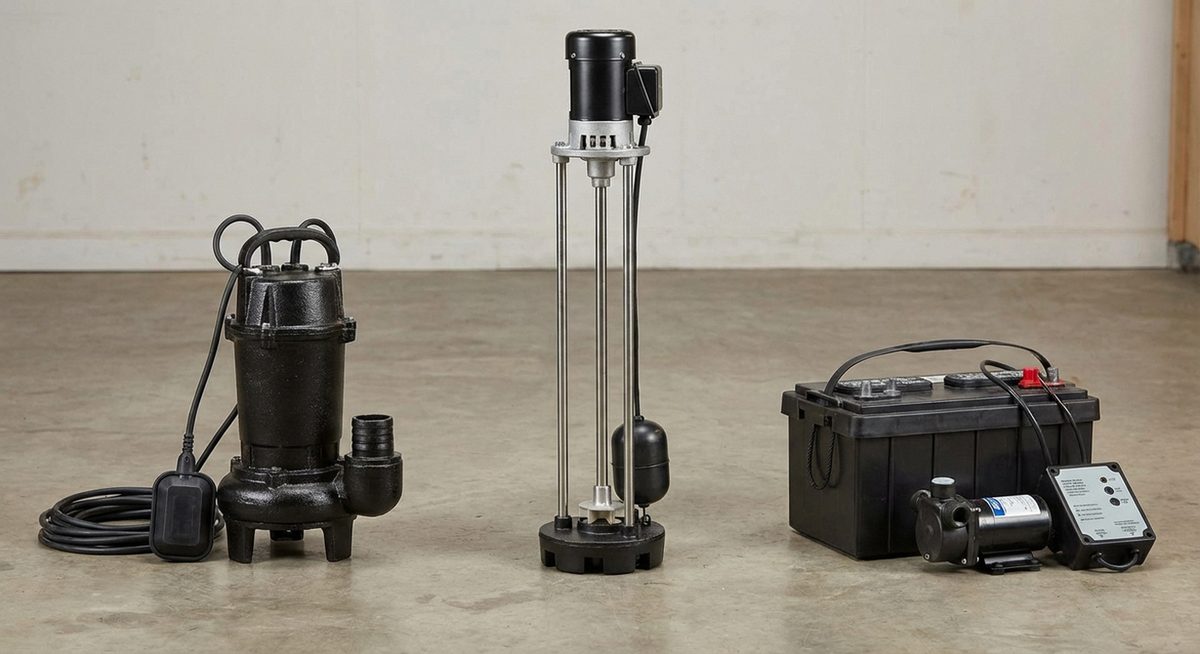
Submersible pumps are designed to operate entirely underwater inside the sump pit. The motor and pump are housed in a single sealed, waterproof unit. Water enters through a grated intake at the base, the impeller spins to create centrifugal force, and water is pushed up through the discharge pipe.
Key Features
- Sealed motor housing: Oil-filled for cooling and lubrication, completely waterproof
- Built-in float switch: Usually integrated into the pump body for a compact design
- Flat or recessed base: Sits securely on the sump pit floor
- Top-discharge design: Outlet at the top for efficient water removal
Advantages
- Quiet operation: Being underwater dampens noise significantly — ideal for living spaces
- Space-efficient: The entire unit fits inside the sump pit with a sealed cover
- Good cooling: Surrounding water keeps the motor cool, allowing extended running periods
- Higher capacity: Generally available in higher flow rates than pedestal pumps
- Handles solids: Most submersible pumps can handle small debris without clogging
Disadvantages
- Higher purchase cost: £200-£1,200 compared to £100-£250 for pedestal pumps
- More difficult to service: Must be removed from the pit for maintenance
- Shorter motor life: Constant water exposure, despite sealing, can eventually cause failure
- Seal failure risk: If the waterproof seal fails, the motor is destroyed
Best For
Finished basements, living spaces, bedrooms, and any situation where noise must be minimised. The most popular choice for UK residential properties.
Pedestal Sump Pumps
How They Work
Pedestal pumps separate the motor from the water. The motor sits on a column above the sump pit, with a long shaft extending down to the impeller at the bottom of the pit. Only the impeller and lower shaft are submerged.
Key Features
- Elevated motor: Positioned 600-900mm above the water line for protection
- Long drive shaft: Connects motor to impeller through the pit depth
- External float switch: Typically a ball-and-arm float alongside the shaft
- Narrow profile: Smaller footprint at pit level allows use in narrower pits
Advantages
- Longer motor life: The motor never contacts water, extending its lifespan to 15-25 years
- Easier to service: Motor is accessible without removing the pump from the pit
- Lower cost: Typically £100-£250, significantly less than submersible models
- Fits narrow pits: The impeller unit is smaller than a complete submersible pump
Disadvantages
- Noisier: The exposed motor generates more audible noise
- Takes up space: The motor column extends above the pit, which may be an issue in finished spaces
- Air-cooled motor: Can overheat during extended running if ambient temperature is high
- Lower capacity: Generally lower flow rates than equivalent submersible pumps
Best For
Utility basements, garages, unfinished cellars, and properties where the pump is in a non-living space. Also suitable where the sump pit is too narrow for a submersible pump.
Battery Backup Sump Pumps
How They Work
Battery backup pumps are secondary pumps powered by a rechargeable battery (usually 12V deep-cycle). They activate only when the primary pump fails or during a power cut. A charging unit keeps the battery topped up during normal operation.
Key Features
- Independent power: Operates during mains power failures
- Automatic activation: Separate float switch triggers the backup when water rises above the primary pump’s shutoff level
- Alarm system: Most include an audible alarm when the backup activates
- Battery monitoring: Charging systems with LED indicators show battery status
Advantages
- Power cut protection: The primary benefit — pumping continues when the mains is down
- Redundancy: Provides a second line of defence if the primary pump fails for any reason
- Peace of mind: Particularly valuable for properties in flood-risk areas or with habitable basements
- Alarm function: Alerts you to problems immediately
Disadvantages
- Limited run time: 4-12 hours depending on battery size and water volume
- Battery maintenance: Batteries need replacement every 3-5 years
- Lower capacity: Typically lower flow rate than primary pumps
- Additional cost: £350-£700 installed, plus ongoing battery replacement
Best For
Any property where pump failure would cause significant damage or disruption. Essential for habitable basements, properties with a history of flooding, and areas prone to power cuts.
Water-Powered Backup Pumps
How They Work
These ingenious devices use mains water pressure to create a venturi effect (suction) that draws water from the sump pit and expels it. No electricity is required — only a connection to your mains water supply.
Key Features
- No electricity needed: Works entirely on mains water pressure
- Automatic activation: Float switch activates the water supply valve
- Unlimited run time: Operates as long as mains water pressure is available
Advantages
- No battery to maintain: Eliminates battery replacement costs and concerns
- Unlimited duration: No battery to run flat during extended power cuts
- Reliable: Very few moving parts — minimal failure points
Disadvantages
- Uses mains water: Consumes 1-2 litres of mains water for every litre of sump water removed
- Lower efficiency: Less powerful than electric pumps
- Requires adequate water pressure: Needs at least 1.5 bar mains pressure
- Not suitable if mains water fails: If water supply is interrupted during a power cut, both fail
- Metered water cost: Can be expensive to run if activated frequently
Best For
A secondary backup option where battery maintenance is impractical or where unlimited run time is more important than efficiency.
Combination (Dual) Sump Pump Systems
How They Work
A combination system includes a primary electric pump and a battery backup pump in a single sump pit. Some systems also include a secondary primary pump that activates if the first can’t keep up with heavy water flow.
Advantages
- Maximum protection: Multiple layers of defence against flooding
- Handles peak flow: Two pumps working together manage extreme water volumes
- Built-in redundancy: If one pump fails, the other takes over
Disadvantages
- Highest cost: £500-£1,500+ for the pump system alone
- Larger sump pit needed: Two pumps require more space
- More maintenance: Two pumps means twice the maintenance
Best For
High-value properties, severe water ingress situations, properties where failure would be catastrophic, and commercial applications.
Sewage and Effluent Pumps
How They Work
These specialised pumps handle foul water containing solid waste. They feature larger passageways and sometimes macerating blades to break down solids. They’re used where toilets, sinks, or showers are below the level of the main sewer.
Key Differences From Standard Sump Pumps
- Larger impeller passages: Handle solid waste without clogging
- Sealed system: Contains odours and prevents contamination
- Specific regulations: Must comply with Building Regulations Part H
- Higher specifications: Designed for more demanding operating conditions
Important Note
Standard sump pumps must never be used for sewage. If you need to pump foul water, a purpose-built sewage pump or macerator is essential for safety, hygiene, and regulatory compliance.
Choosing the Right Pump: Decision Guide
| Your Situation | Recommended Pump Type |
|---|---|
| Finished basement, living space | Submersible + battery backup |
| Unfinished cellar, utility use | Pedestal or submersible |
| High flood risk area | Submersible + battery backup (combination system) |
| Tight budget | Pedestal (with plans to add backup later) |
| Narrow sump pit | Pedestal |
| Frequent power cuts | Any primary + battery backup or water-powered backup |
| Severe water ingress | Dual submersible combination system |
| Below-sewer bathroom | Sewage pump/macerator (not a standard sump pump) |
Specifications to Consider
Flow Rate
Measured in litres per hour (L/hr) or gallons per hour (GPH). Residential pumps typically range from 5,000-15,000 L/hr. Your pump needs to move water faster than it enters the sump.
Head Height
The maximum vertical distance the pump can push water. Must exceed the actual vertical distance from your sump to the discharge point, plus allowance for friction losses in the pipe.
Power Rating
Measured in watts or horsepower. Match to your needs — oversized pumps waste energy and cycle too frequently, while undersized pumps run continuously and fail prematurely.
Build Quality
Look for stainless steel or cast iron construction rather than plastic. Quality components cost more upfront but last significantly longer. Read about how these components work together.
Frequently Asked Questions
Which type of sump pump is most reliable?
Submersible pumps from reputable manufacturers (Grundfos, Jung, Wilo) are generally the most reliable for residential use. A combination system with battery backup provides the highest overall reliability.
How loud are sump pumps?
Submersible pumps typically produce 30-50 dB — about the level of a quiet conversation. Pedestal pumps are louder at 50-70 dB — comparable to a washing machine. Modern submersible pumps are remarkably quiet.
Can I replace my pedestal pump with a submersible?
Usually, yes — provided your sump pit is large enough to accommodate a submersible pump. A minimum pit diameter of 300mm is typically needed. A professional can assess your pit and recommend the best option.
Do I really need a battery backup?
If your basement contains anything of value, or if it’s used as living space, a battery backup is strongly recommended. Power cuts often coincide with storms — exactly when your pump needs to work most.
What brand of sump pump is best?
In the UK market, Grundfos, Jung Pumpen, Wilo, and DAB are well-regarded for quality and reliability. Avoid the cheapest no-name brands — the modest saving isn’t worth the risk of premature failure.
How do I know what size pump I need?
A professional assessment is the best way to determine the right pump size. Factors include: water ingress rate, pit size, discharge distance and height, and the level of protection required. Consult a qualified drainage specialist for expert sizing advice.
Can I use a submersible pump in a shallow pit?
Some compact submersible pumps are designed for shallow pits (as little as 200mm water depth). However, most standard submersible pumps need at least 300mm of water for proper cooling. A pedestal pump may be better for very shallow pits.
What’s the difference between a sump pump and a utility pump?
A sump pump is designed for permanent, automatic operation with a float switch. A utility pump is a manual, portable pump for occasional use (e.g., draining a paddling pool). Utility pumps are not suitable as permanent basement protection.
How often should I replace my sump pump?
Quality submersible pumps last 7-10 years; pedestal pumps can last 15-25 years. Replace before failure — don’t wait for a flood to discover your pump is worn out. A professional service can assess remaining pump life.
Can one sump pump serve my whole basement?
For most residential basements, one properly sized pump is sufficient. Very large basements, L-shaped layouts, or properties with multiple water entry points may benefit from multiple sump stations.
Are there smart sump pumps?
Yes. Modern sump pump controllers can connect to WiFi and send alerts to your phone when the pump activates, when water levels rise, or when a problem is detected. These systems are becoming increasingly affordable.
What maintenance do different pump types need?
All types need regular testing and annual servicing. Submersible pumps need the pit cleaned and the pump inspected. Pedestal pumps need motor oiling and shaft inspection. Battery backup systems need regular battery checks. See our complete maintenance checklist.
Expert Pump Selection and Installation
Choosing the right sump pump is an investment in your property’s protection. A qualified drainage specialist can assess your property’s specific needs and recommend the most effective, cost-efficient pump system.