Why Sump Pump Maintenance Matters
Your sump pump is your property’s first line of defence against basement flooding. Like any mechanical system, it needs regular maintenance to perform reliably when you need it most. A pump that fails during a storm can result in thousands of pounds of water damage — and pump failures almost always happen at the worst possible time.
At Sump Plus in Ipswich, Suffolk, we service hundreds of sump pumps across East Anglia. This comprehensive maintenance checklist helps you keep your pump running smoothly year-round.
Monthly Maintenance Tasks
Visual Inspection
- Check the sump pit cover is secure and undamaged
- Look for any visible debris around the sump area
- Check that the power cord is intact and properly connected
- Ensure the pump’s power indicator light (if fitted) is on
- Listen briefly for any unusual sounds (clicking, humming when it shouldn’t be running)
Battery Backup Check (If Fitted)
- Check the battery indicator light — green means charged
- Ensure the charger is connected and functioning
- Check battery terminals for corrosion (white or green deposits)
Quarterly Maintenance Tasks
Pump Function Test
This is the most important routine test. Pour approximately 20 litres of water (about two buckets) into the sump pit and observe:
- The float switch should rise and activate the pump
- The pump should start within seconds
- Water should be removed quickly (within 15-30 seconds for most pumps)
- The pump should shut off automatically once the water level drops
- No water should flow back through the discharge pipe (confirming the non-return valve works)
If any step fails, contact a professional immediately. Don’t wait until the next heavy rain to discover your pump isn’t working.
Float Switch Test
- Manually lift the float to confirm it moves freely and activates the pump
- Check that the float isn’t tangled on the power cord or caught on the pit wall
- For tethered floats, ensure the tether length allows full travel
- Clean any debris or slime from the float mechanism
Alarm System Test
If your system has a high-water alarm:
- Test the alarm by raising the water level above the pump’s shutoff point
- Ensure the alarm is audible from living areas
- Replace alarm batteries if fitted (most alarms use a 9V battery)
Bi-Annual Maintenance Tasks (Spring and Autumn)
Spring — Preparing for Wet Season
Spring maintenance ensures your pump is ready for the wetter months ahead:
Clean the Sump Pit
- Remove the pump from the pit (disconnect power first!)
- Remove any debris, silt, gravel, or objects that have fallen in
- Check that inlet pipes and perforations in the pit wall are clear
- Clean the inside of the pit with clean water
- Replace the pump and reconnect power
Inspect the Pump
- Check the impeller for debris — small stones, leaves, or sediment can reduce performance
- Clean the pump intake screen/filter
- Inspect the power cord for damage, particularly where it enters the pump housing
- Check for any signs of oil leakage (submersible pumps contain oil for cooling)
Check the Discharge System
- Walk the discharge pipe route and check for damage, sagging, or disconnection
- Ensure the outfall point is clear — leaf litter, soil, or grass growth can block it
- Check that the discharge isn’t creating erosion at the outfall
- If the discharge connects to a drain, ensure the drain is flowing freely
Autumn — Pre-Winter Preparation
Autumn maintenance prepares for winter storms and potential freezing:
Freeze Protection
- Insulate any exposed discharge pipe above ground (pipe lagging is inexpensive and effective)
- Ensure the discharge pipe has a slight fall to prevent standing water that could freeze
- If your discharge route is particularly exposed, consider heat trace cable
- Check that the sump pit cover is sealed to prevent cold air from reaching the pump
Battery Backup Service
- Check battery charge level and top up electrolyte if applicable
- Clean battery terminals
- Test the backup system by disconnecting mains power and running the pump on battery
- Replace batteries that are more than 3 years old (they lose capacity with age)
Annual Professional Service
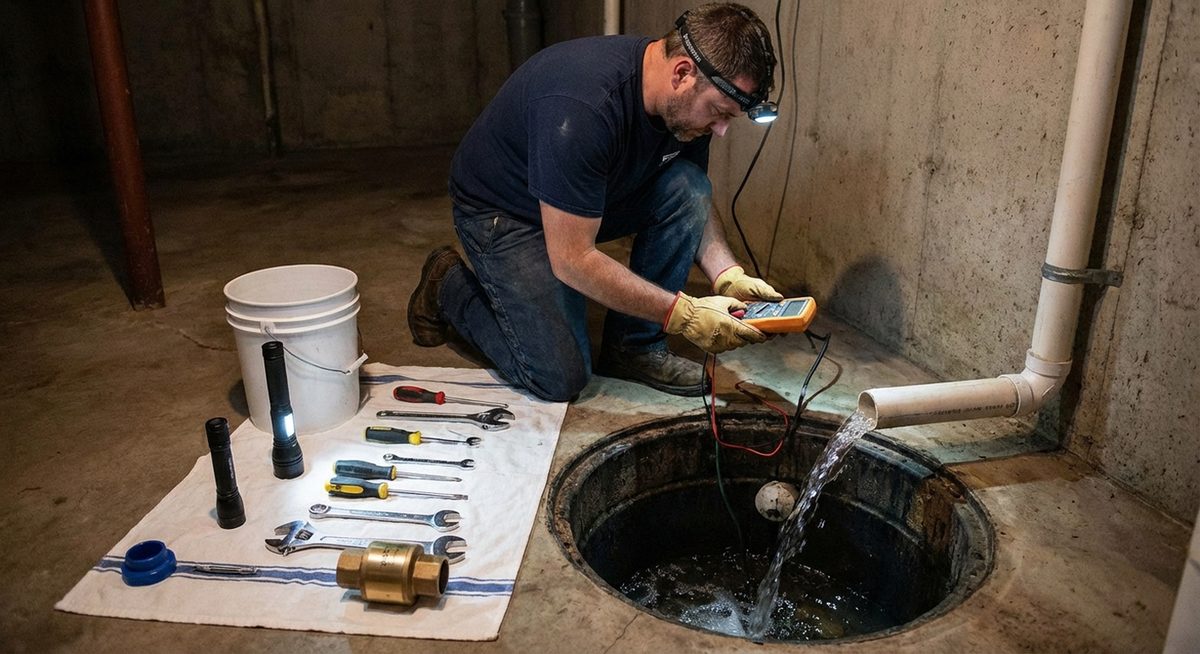
In addition to your own maintenance, we recommend an annual professional service. A qualified engineer will:
- Test pump flow rate against manufacturer specifications
- Check motor current draw (increased current indicates wear)
- Inspect and test the non-return valve under load
- Verify electrical connections and RCD protection
- Assess pump condition and estimate remaining life
- Check the entire drainage system feeding the sump
- Provide a written service report
Annual servicing typically costs £80-£150 and can identify problems before they cause failures. Learn more about sump pump costs including ongoing maintenance.
Signs Your Pump Needs Immediate Attention
Don’t wait for the next scheduled maintenance if you notice any of these warning signs:
- Unusual noises: Grinding, rattling, or screeching sounds indicate mechanical problems
- Vibration: Excessive vibration suggests a damaged impeller or worn bearings
- Continuous running: A pump that doesn’t shut off has a float switch problem or is overwhelmed
- Frequent cycling: Rapid on/off switching stresses the motor and suggests a sizing or float issue
- Visible rust or corrosion: Particularly around electrical connections or the pump housing
- Water not being removed: The pump runs but water level doesn’t drop — impeller may be damaged
- Burning smell: An overheating motor requires immediate attention — disconnect power
- Tripped circuit breaker: Repeated tripping indicates an electrical fault
For any of these issues, call Sump Plus on for prompt professional assistance.
DIY vs Professional Maintenance
| Task | DIY Suitable? | Notes |
|---|---|---|
| Visual inspection | Yes | Monthly — anyone can do this |
| Pour-water test | Yes | Quarterly — simple and essential |
| Float switch check | Yes | Quarterly — just lift and release |
| Pit cleaning | Yes (with care) | Disconnect power first, wear gloves |
| Discharge pipe check | Yes | Walk the route, clear the outfall |
| Battery replacement | Yes | Follow manufacturer instructions |
| Pump removal and inspection | Experienced DIY only | Take care with electrical connections |
| Electrical testing | No — professional only | Part P compliance required |
| Flow rate testing | No — professional only | Requires specialist equipment |
| Pump replacement | No — professional recommended | Ensures correct sizing and installation |
Extending Your Pump’s Life
Good maintenance practices can significantly extend pump life beyond the typical 7-10 year expectancy:
- Keep the pit clean: Debris is the number one cause of premature pump failure
- Don’t let the pump run dry: Ensure the float switch is set correctly so the pump shuts off before the water level drops too low
- Avoid continuous running: If your pump runs constantly, it’s undersized or there’s a problem — address it promptly
- Use a surge protector: Power surges can damage pump electronics
- Maintain the non-return valve: A failed valve causes the pump to work twice as hard
- Address vibration: Fit anti-vibration mounts if the pump vibrates excessively
When to Replace Rather Than Repair
Sometimes repair isn’t worthwhile. Consider replacement if:
- The pump is more than 10 years old
- Repair cost exceeds 50% of replacement cost
- The pump has been repaired multiple times
- Performance has noticeably declined (slower water removal, louder operation)
- More efficient models are available that would reduce running costs
- Your needs have changed (e.g., you’ve converted your basement to living space)
For help choosing a replacement, see our guide to types of sump pumps.
Frequently Asked Questions
How often should I test my sump pump?
At minimum, test quarterly by pouring water into the pit. We recommend monthly testing during autumn and winter, and always test after returning from an extended holiday.
Can I maintain my sump pump myself?
Yes, most routine maintenance is straightforward. Visual inspections, pour-water tests, float switch checks, and pit cleaning are all suitable DIY tasks. Electrical work and detailed pump inspection should be left to professionals.
What should I do before going on holiday?
Test the pump, check the battery backup, ensure the pit is clean, and consider asking a neighbour to check the basement periodically during extended absences. Some smart pump systems can send alerts to your phone.
How long should a sump pump last?
With proper maintenance, a quality sump pump typically lasts 7-10 years. Some premium models last 15+ years. Poor maintenance or continuous running can reduce life to 3-5 years.
Is an annual service really necessary?
Yes. Professional servicing identifies problems you can’t detect yourself — declining flow rates, increased current draw, and worn components. The £80-£150 cost is minimal compared to the cost of pump failure.
What happens if I don’t maintain my sump pump?
Neglected pumps fail prematurely, usually when you need them most. A blocked pit, stuck float, or worn impeller can turn a minor rain event into a major flooding incident. The cost of damage far exceeds the cost of maintenance.
Should I keep a spare pump?
If your property is at high flood risk or your basement contains valuable items or is habitable space, keeping a spare pump is sensible insurance. Store it in a dry, accessible location with the necessary fittings.
Can I connect my sump pump to a smart home system?
Yes. WiFi-enabled pump monitors and smart water sensors can send alerts to your phone if water levels rise, the pump fails, or the battery backup activates. This technology is becoming increasingly affordable and reliable.
Professional Sump Pump Servicing
Sump Plus offers comprehensive sump pump servicing and maintenance packages for residential and commercial properties across Ipswich, Suffolk, and East Anglia. The service plans include scheduled maintenance visits, emergency callout priority, and discounted parts.