Sump Pump vs French Drain: Understanding the Difference
When dealing with water problems around your property, two solutions come up repeatedly: sump pumps and French drains. Both manage unwanted water, but they work in fundamentally different ways and are suited to different situations.
Many drainage professionals install both systems and often recommend a combination of the two. This guide helps you understand which solution — or combination — is right for your property.
What Is a French Drain?
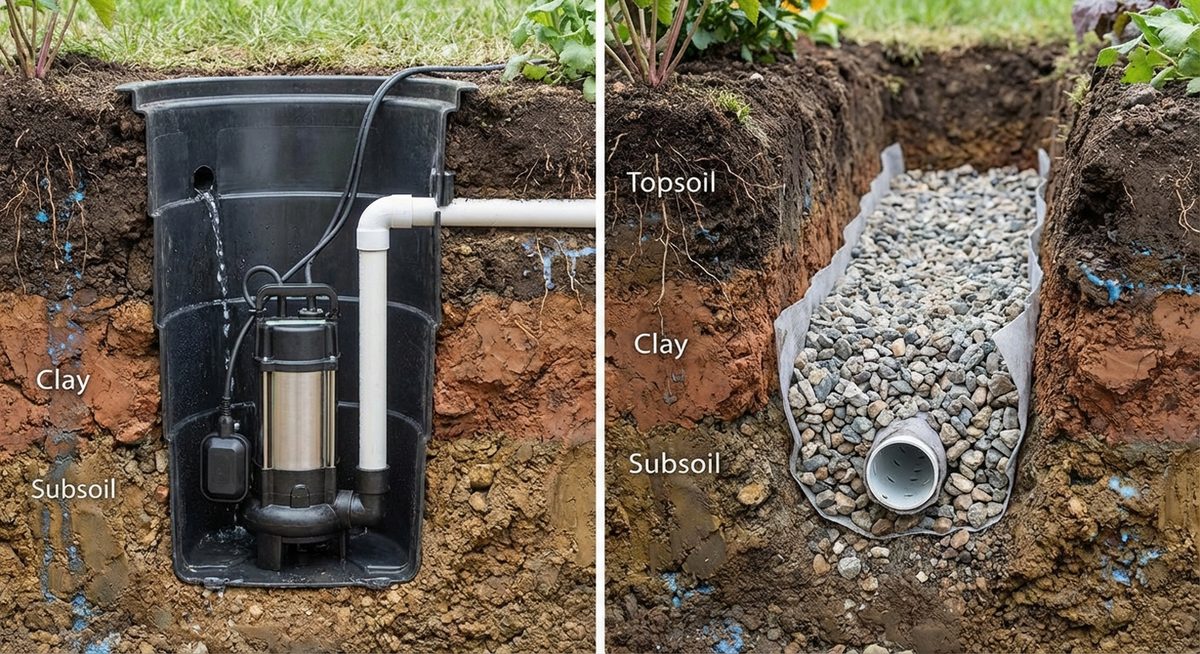
A French drain (also called a land drain or weeping tile) is a gravel-filled trench containing a perforated pipe. It works entirely by gravity, intercepting groundwater and redirecting it to a lower discharge point such as a soakaway, ditch, or storm drain.
How a French Drain Works
- Water in the soil is drawn towards the gravel-filled trench (gravel is more permeable than surrounding soil)
- Water enters the perforated pipe through its holes
- Gravity carries the water along the pipe’s gentle gradient
- Water discharges at a lower point away from the property
Components
- Trench: Typically 300-450mm wide and 600-900mm deep
- Perforated pipe: Usually 100mm diameter perforated or slotted plastic pipe
- Gravel: Clean, washed gravel (20-40mm) surrounding the pipe
- Geotextile membrane: Wraps the gravel to prevent soil from clogging the system
What Is a Sump Pump?
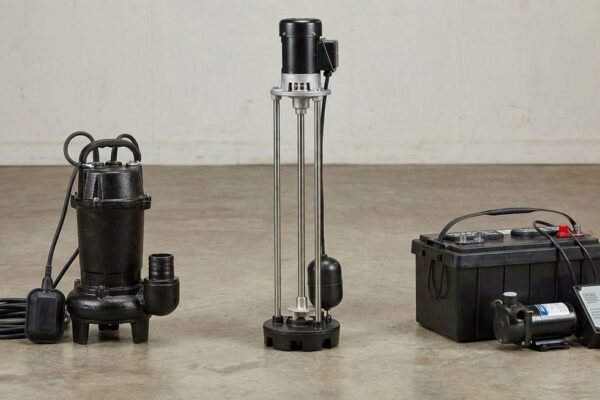
A sump pump system consists of a pit (sump) that collects water and an electrically powered pump that actively removes the water and discharges it away from the property. Unlike a French drain, a sump pump works against gravity, pushing water upward and outward.
For a detailed explanation of the mechanics, read our guide on how sump pumps work.
Head-to-Head Comparison
| Feature | French Drain | Sump Pump |
|---|---|---|
| Power source | Gravity (no electricity) | Electrical (mains + optional battery backup) |
| Installation location | External (garden/perimeter) | Internal (basement) or external |
| Works against gravity | No — needs a gradient | Yes — pumps water upward |
| Maintenance | Low — occasional jetting | Moderate — quarterly testing, annual service |
| Running costs | None | £20-£50/year electricity |
| Installation cost | £40-£80 per metre | £800-£5,000 depending on system |
| Handles heavy water volume | Limited by pipe diameter and gradient | High — modern pumps shift 10,000+ litres/hour |
| Works during power cuts | Yes | Only with battery backup |
| Lifespan | 20-30 years if properly installed | Pump: 7-10 years; pit: 25+ years |
| Suitable for basements | External perimeter only | Yes — the primary internal solution |
| Noise | Silent | Minimal (submersible) to moderate (pedestal) |
When to Choose a French Drain
A French drain is the better choice when:
- You need to manage surface water — Water pooling in your garden, driveway, or against your foundation
- You have adequate gradient — The ground slopes away from your property, allowing gravity drainage
- There’s a suitable discharge point — A ditch, soakaway, or storm drain lower than the drain
- You want zero running costs — No electricity means no ongoing expense
- You want minimal maintenance — A properly installed French drain needs very little attention
- Water problems are moderate — French drains handle steady, moderate water flow well
When to Choose a Sump Pump
A sump pump is the better choice when:
- You have a basement or cellar — The only effective internal solution for below-ground water management
- There’s no gravity outlet — When you can’t drain by gravity, you must pump
- Water volume is high — Pumps handle large volumes that would overwhelm a French drain
- The water table is high — When groundwater is at or above basement level
- You need guaranteed removal — A pump actively removes water rather than relying on passive drainage
- Space is limited — A sump pit takes up less space than trenching
When You Need Both
In many situations, the best solution combines both systems. Common combinations include:
French Drain Feeding a Sump Pump
External French drains around the property perimeter collect groundwater and direct it to a sump pit, where a pump discharges it. This provides both passive interception and active removal.
Internal Perimeter Channel With Sump Pump
Inside the basement, a channel cut into the floor perimeter (similar in principle to a French drain) collects water and directs it to a sump. This is the standard Type C waterproofing approach.
French Drain Plus Basement Sump
External French drains manage garden and surface drainage while an independent internal sump system protects the basement. The two systems work independently but complement each other.
Installation Considerations for Suffolk Properties
The geology and climate of Suffolk create specific challenges:
- Clay soils — Suffolk’s clay soils limit the effectiveness of soakaways, meaning French drains may need to discharge to a watercourse or storm drain rather than a soakaway
- Flat terrain — Limited natural gradient can make gravity-fed French drains less effective, favouring pump solutions
- High water table — Coastal and riverside areas often have high water tables that overwhelm passive drainage
- Winter rainfall — Extended wet periods mean drainage systems must cope with sustained water flow, not just peak events
Cost Comparison
| Item | French Drain | Sump Pump |
|---|---|---|
| Installation (typical residential) | £1,500-£4,000 | £800-£5,000 |
| Annual running cost | £0 | £20-£50 |
| Annual maintenance | £0-£100 | £80-£150 |
| Replacement (when needed) | £1,500-£4,000 after 20-30 years | £400-£800 every 7-10 years |
| 10-year total cost | £1,500-£4,100 | £1,600-£7,000 |
For detailed pricing, see our sump pump installation cost guide.
Maintenance Comparison
French Drain Maintenance
- Inspect outfall points annually for blockages
- Keep access chambers clear
- Jet-clean the pipe every 3-5 years if flow reduces
- Ensure geotextile remains intact (check at any inspection points)
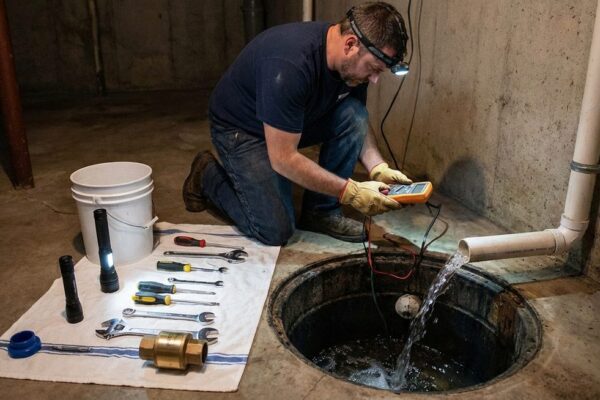
Sump Pump Maintenance
- Test quarterly by pouring water into the sump
- Clean debris from sump pit annually
- Check float switch operation
- Inspect discharge pipe and non-return valve
- Professional service annually
For a complete guide, see our sump pump maintenance checklist.
Frequently Asked Questions
Can a French drain replace a sump pump?
Only if you have adequate gradient for gravity drainage and moderate water volumes. For basements with high water tables, a sump pump is essential — a French drain alone won’t be sufficient.
Which is better for a basement?
A sump pump is the standard solution for basement waterproofing. French drains work best outside the building. For maximum protection, use both: external French drains to manage perimeter water, and an internal sump pump system for the basement itself.
Do French drains get blocked?
Over time, silt can accumulate in the pipe and gravel. Proper geotextile wrapping significantly reduces this. With correct installation, a French drain should function effectively for 20-30 years.
Can I install a French drain myself?
A simple garden French drain is a manageable DIY project for competent homeowners. However, drains near foundations or those connecting to main drainage should be professionally installed.
Do French drains work in clay soil?
Yes, but the design must account for clay’s low permeability. Wider trenches, more gravel, and careful attention to the discharge point are important. In heavy clay, a sump pump may be more effective.
What if I don’t have anywhere to discharge water?
If there’s no storm drain, ditch, or suitable soakaway location, you may need to pump water to a higher discharge point or apply to your water authority for permission to connect to a surface water sewer.
Which option is more environmentally friendly?
French drains use no energy and work passively, making them more environmentally friendly. However, sump pumps use very little electricity. Both can be integrated with sustainable drainage systems for optimal environmental performance.
How deep should a French drain be?
Typically 600-900mm deep for residential applications. The depth should be below the level at which water is causing problems. Near foundations, the drain should be at or below footing level.
Get Expert Advice
The right solution depends on your specific property, soil conditions, and water problems. At Sump Plus, we assess each property individually and recommend the most effective, cost-efficient approach.